| |
-
Learning of Simoron
At my 1999 Flower of Life seminar in Kiev I met Tamara. She is an interesting new-age person in her fifties. And she mentioned Simoron — a school of "fun magic" where she is studying.
I didn't pay much attention to what she was saying at the time. Still, Tamara's tale was put in storage in my memory, and from time to time I wondered what it meant.
Tamara said that she earned her bread by selling something in a bazaar,[1] and was paid a percentage of how much she would sell through the day. Tamara didn't tell me what it was she was selling, and I never asked — but what she did say was that she was using "Simoron techniques" — techniques learned at her school — for achieving incredible results!
First of all, she was selling several times more items than her fellow sellers who also worked for the same person. Other sellers would try to get into her "luck zone" by standing next to her, or at the place she just vacated, but none of this worked for them. She was selling so much that it was hard for her employer to part with the money he had to pay her.
She said to me: "I told the others it's all because I use Simoron techniques. They teach me this in the school!" But the others didn't believe her, and continued to look for her "secret method."
Another thing Tamara told me at that time was that Simoron School had many more students in Kiev than in Moscow, which is unusual — about 500 students in Kiev, but only 100 students in Moscow. Later, I learned that Petr Burlan, the founder of Simoron school, lives in Kiev. From there the school has now spread to other cities and countries.
Simoron seminars work non-stop from September until May. Students attend a lecture once a week, and the cost is about $15 a month.
The Simoron Books
 At the time I first learned about Simoron from Tamara, I thought, I'm not interested in money — only in Higher Matters, like love and freedom. So Tamara's tale didn't impress me much, and I didn't feel I wanted to go to a Simoron lecture. At the time I first learned about Simoron from Tamara, I thought, I'm not interested in money — only in Higher Matters, like love and freedom. So Tamara's tale didn't impress me much, and I didn't feel I wanted to go to a Simoron lecture.
But my perception of Petr Burlan's school changed from passive theoretical interest to active experimental, practical interest when I bought a book titled A Course for the Novice Sorcerer: How to Have Good Luck, written by Simoron instructors Gurahgov (nicknamed "the Beard") and Dolohov ("Papa"). I saw that there existed a whole school of Light Sorcery and Magic right under my nose — in my city — that I hadn't even known about. A school teaching the everyday magic we need the most.
It's not exactly Harry Potter. Simoron students don't learn how to grow their hair in one night or turn animals into teacups. This is more practical, like summoning parking places, or banishing unpleasant circumstances.
My mother and I tried some of the techniques, and we loved the results. I especially appreciated that my mom liked her Simoron results, because in the past she has been skeptical about her ability to do psychic feats.
Simoron Techniques: State of Soaring
 In their book, Papa and the Beard describe one of the basic Simoron ideas in the following way: In their book, Papa and the Beard describe one of the basic Simoron ideas in the following way:
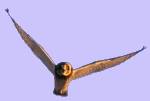
Have you seen a soaring bird? It has spread its wings and freely glides in the space with ease, and overcomes nothing. It spends no energy, and can soar in the blue sky forever.
The basic idea in Simoron is to spend as much time as possible in this state of soaring.
If I am soaring, how can there be a problem requiring my attention? All the correct decisions come to me easily with no effort. Everything clicks into place. I fly along a path of success, where all the doors open at my approach. I can feel mutual agreement between myself and the world, natural, mutual understanding so deep that otherwise it would require years to achieve.
How to get into the State of Soaring
Pretty easily. You just need to change something inside of yourself in such a way that the outside reality will reflect it by changing into the desired direction or simply changing for the better.
The easiest technique to achieve soaring is called "Thanking Vanechka for Signals."
When a practicing Simoronist meets an obstacle, he or she first of all notices it with respect. Because in Simoron, obstacles are important signals.
There are four levels of signals:
- First level — Faraway signals that show up as something not related to you.
- Second level — Personal signals that show up as something approaching you.
- Third level — Personal signals that show up as something close to you.
- Fourth level — Inside signals, like sickness, fear, worry, and doubt.
The rule is that a signal appears first as a level one, and then goes all the way to level four if you don't work with it before that.
Probably you've heard of a person who has a life full of problems that just keep on getting bigger and bigger. This is a person who, for his or her own reasons, has been ignoring one or several signals until finally they got to the fourth level.
Working with Signals: "Thanking Vanechka"
To begin working with signals, the most important thing is to be grateful that they are there!
This is only natural. It's easy to be thankful for a signal, because it forewarns us, and so we can prevent bigger signals — and bigger problems.
In expressing gratitude, we give a name to the energy being who causes the signals to manifest. Simoronists use the name "Vanechka," a diminutive form of the common name Ivan or Vania.
Here's an example:
Let's say you are walking the dark street and you see a big, suspicious-looking man. You may feel afraid that he may take money from you, and you may begin to think about what to do.
A Simoronist knows that the man in the outside reality is but a projection of inside reality. It's a signal that a person is not in the state of soaring.
How can a Simoronist not feel gratitude for such a forewarning?!
So in this situation, a person would begin by thanking Vanechka for the signal (not necessarily aloud):
"I thank you, Vanechka, that you are warning me that I left a state of harmony. I know that this is the reason for your appearance on my path. I should give you my attention, or otherwise the clouds will get more dense and I will be surrounded by more of my own horrible projections. And the end to all this may be that I myself can become one of those projections."
This is one of an infinite number of possible thank-you monologues. It all depends on what you feel and on your fantasy. What counts is your attention, gratitude, and humor.
The monologue is only the first part of a Simoronist action, but this alone can discharge a tough situation. For example, in the scenario of the threatening man, somebody might call him aside, or a police car could show up, or your friends might appear from behind the next building. You might end up talking to the man and discover that you both went to the same kindergarten.
So the gratitude speech prevents the situation from getting worse.
Working with Signals: Giving a Gift to Vanechka
The next step is to give Vania, or Vanechka, the thing he is lacking — and to give this gift with typical Simoron energy — which includes joy and humor.
 To know what to give, you first ask yourself, "What is Vania taking from me in this situation?" Is it health? Courage? Peace or emotional comfort? Confidence? Whatever it is that this situation is taking from you — add your own values to those I've given — this is what Vania is trying to take from you because he needs it. To know what to give, you first ask yourself, "What is Vania taking from me in this situation?" Is it health? Courage? Peace or emotional comfort? Confidence? Whatever it is that this situation is taking from you — add your own values to those I've given — this is what Vania is trying to take from you because he needs it.
So instead of having Vanechka take this quality from you, you summon reserves of it and send it to Vanechka as a gift.
For example, if you felt afraid, then Vania was creating a situation to take away your peace and courage. This is what he lacks, and so it is what you are going to have to give him. And when he gets your gift, then the obstacle will lessen or vanish altogether.
We give this gift to Vanechka in the form of an image. And we need to "wrap" it nicely. Every time, the wrapping will be different. It should be an image that he likes and that you like.
Unleash your imagination, and create a nice image. Some people enjoy making fantastic, surreal pictures — like a tree with doughnuts in place of fruit. It's up to you.
Working with Signals: The Speech of Gratitude
After you send the signal, you now say a more complete gratitude speech. So for the example we used above, a typical speech might look something like this:
"I thank you, Vanechka, for the warning that you might get to me, and that it could all end with your beating me up and taking my money. Or worse, I might have to became the same kind of hoodlum that you are. Or I might have to beg for money. So — I thank you from my heart for this warning, and I give you this gift of courage and peace in the image of a crane wearing rubber boots and painting a fence with green paint using a vacuum cleaner."
Remote controlling
I am very impressed by another Simoron technique that makes us remember that it is we who create our realities.
Once, a young woman approached a Simoron practitioner asking for help. He listened to her life story and suddenly he saw a cure for her. He told her to carry with her a TV remote with a red button. She was to repeat to herself that it was she who was choosing channels in her life. When she didn't like the way a particular situation would evolve, she was to press buttons on her remote — openly, or secretly in her purse — to switch channels.
The very next day, our young woman needed to have an administrator at her college sign an important paper for her. She walked into his room and he began his expected refusal speech. At this point, she remembered that she had left her purse, with the remote, behind the door. So she excused herself and went after it. Then she came back, switching channels in her purse, to face now an administrator who had totally changed into someone eager to sign her paper and move on to his other business!
I can imagine us all walking around with remotes and switching realities all over the place! We could also find a nice magic wand like Harry Potter's. Whatever seems most powerful to each of us will work.
Translation into a self-mode
Another Simoron technique that I want to tell you about was published in the second book by Papa and the Beard called A Course for the Novice Sorcerer: The Technology of Success.
This method is very simple. Let's presume that I have a conflict with a person. First, I describe the conflict on paper. Then, I simply go through and change all the references to that person to be referring to myself. This process allows me to openly name my chief "enemy" — myself, or my ego.
Below is an example dialogue of a married couple from Russia, with all the second-person references changed to reflect the self.
"Why did I come home so late? Do I think I was spending time with women?"
"I was doing business."
"What sort of business do I have after 11 p.m.?"
"I don't ever ask myself why I'm late coming home from work."
"Next time I come home, I won't be there."
"Maybe I need to stop making threats to myself."
"I don't care what I say."
"So, I'm saying I don't care about myself?"
By writing such a dialogue, we break the wall dividing ourselves and the other person. We see the obvious — the absurdity of the fight. We see that in reality we fight nobody but ourselves.
A moment comes when we can no longer tell who is saying what in this dialogue, or even what is going on.
Normally, the situation is supposed to relax immediately after writing the self-mode translation. If it doesn't happen that way, you need to repeat several key parts, or the funniest parts, of the dialogue until the conflict dissolves completely.
You can apply this method to any problem. And you can go even deeper than that by making a full translation into self-mode of any life situation.
Simoron teaches other incredible techniques, including special Simoron mantras, dances, and special languages — for example, a language for talking to animals.
Petr Burlan: His Life and His School
Recently, I met someone who knew Burlan from amateur theater times, long before he began his Simoron School. She was in a life situation where it seemed that all hell had broken loose. Although she felt that she was striving to improve, everything was going wrong.
It was obvious to me that she was in a typical Simoron situation, where she was not responding to the signals the Universe was sending, and the signals kept getting stronger and stronger.
Yet to my surprise, she was very disinclined to consider Simoron techniques for fixing her life.
"Learning from Burlan?" she would tell me. "No way! I can't imaging coming to his class. Do you know how many problems he had in his life?"
I arrived at two conclusions from this.
First, I can't make anyone happy against their will.
And second, Burlan apparently had a whole lot of raw material in his personal life in order to develop his wonderful Simoron school of fun magic that has helped so many.
Indoma and Keys to Joyous Celebration
 I tried Simoron techniques for myself, and to my surprise they seemed to work. A bus would arrive out of the blue after I thanked Vanechka. Now I think I know the secret behind Simoron magic — or rather the key to it. The key is Joy. I thought of this explanation while reading Indoma's thoughts . They are about centering oneself in the Joy mood. Then everything will go smoothly, for the outside world is reflecting to us what's inside. I tried Simoron techniques for myself, and to my surprise they seemed to work. A bus would arrive out of the blue after I thanked Vanechka. Now I think I know the secret behind Simoron magic — or rather the key to it. The key is Joy. I thought of this explanation while reading Indoma's thoughts . They are about centering oneself in the Joy mood. Then everything will go smoothly, for the outside world is reflecting to us what's inside.
Indoma seeks to create joy directly rather than through "technology," as with Simoron. You might want to check out this website for keys to .
We can also use Abraham's to describe this process. We attract those things we give our attention to. So if we switch our attention from a problem to joy and things joyous, then we are attracting joyous things, events, and people. Problems vanish.
Before Petr Burlan developed Simoron, he was apparently thinking negatively and attracting lots of problems into his life. But he found courage to discover his personal way to Joy, and now has shared this way with many thankful others.
Burlan teaches his students how to come into the place of joy through formal techniques designed to make us laugh and to make our thinking imaginative, creative, funny, joyous, and celebrational. We can compare Burlan's methods to Abraham's "pivoting," nicely described at . Abraham also suggests getting in the proper mood of joy through the use of music or nature sounds.
Burlan on Development of his System
In the Afterword to Papa and the Beard's book on Simoron, Burlan wrote: "Of course, my system has outgrown what is in the book, and become more consecutive and simple, to the point where now any lazy person would be able to use it."
That sounds very attractive to me! So I am going to attend the school, beginning in January. And I'll have more to tell you then.

Footnotes:
I am 34, and bazaars came into my life only after Perestroika. Before that, my family had to buy everything we needed in the state stores. After Perestroika, bazaars shifted from a rather expensive, food-only mode into a cheap, almost-everything mode. For example, Ukrainians now buy most of their clothes in bazaars.
Lead graphic is from part of a painting by Don Maitz.
References:
- Vadim Gurangov, Vladimir Dolohov, A Course for the Novice Sorcerer: How to Have Good Luck, published in Russian by Petr, 2001
- Vadim Gurangov, Vladimir Dolohov, A Course for the Novice Sorcerer: The Technology of Success, published in Russian by Petr, 2001
- Simoron school in Kiev, Ukraine: website (in Russian) ; email: . There also were contacts outside Ukraine listed on the Simoron website, and I give them below, but Burlan wrote to tell me that they don't yet do seminars outside the former Soviet Union.
- Germany: (, e-mail –
- Italy: (, e-mail –
- USA:, e-mail –
- Canada:
- Holland: , e-mail –
Top of Page
 Print Version
|
|
|