| |
-
If you bring forth what is within you,
what you bring forth will save you.
If you do not bring forth what is within you,
what you do not bring forth will destroy you...
For whoever has not known himself has known nothing,
But whoever has known himself
has simultaneously achieved knowledge
About the depth of all things.
— The Gospel of St. Thomas
The beliefs of all religious traditions have fundamental unifying principles that are easily obscured when one focuses on the points of differences.
In terms of its perspective on ascension, Gnosticism does not embrace the popular belief in a Second Coming, nor does it align itself with New Age perspectives that speak of a change in the earth's cycle or a dimensional shift that will create spiritual enlightenment.
The point of connection is that the Gnostic sees these ideas as important metaphors for shifts that happen within the individual when they gain gnosis: the knowledge of transcendence arrived at by way of interior, intuitive means.
Purifying consciousness is the path to ascension
The possibility of ascension, according to the Gnostic perspective, is based on whether or not you have purified your consciousness and achieved a union with divine consciousness while you were on earth.
''Gnosticism is not ethically or action oriented,'' Gnostic Bishop Stephan A. Hoeller explains. ''All of those things have their uses here on earth, but one does not earn their return to the divine based on what one does or doesn't do.''
The purifying of consciousness is achieved by leaving earthly attachments and earthly thoughts behind and concentrating on the divine. The experience of knowing God (Gnosis), is an experience of consciousness that is related to the concept of enlightenment, spoken of in the Buddhist tradition.
Our essential nature comes from other realms
The Gnostic point of view is that our presence here on earth is the result of a descent from an immaterial and transcendental realm. Our essential nature comes from other realms of consciousness and our consciousness gravitates back to the place from where it comes.
In an article entitled ''The Gnostic World View,''[1] Dr. Hoeller writes:
Anything that causes us to remain attached to earthly things serves to keep us in enslavement to these lower cosmic rulers. Death releases the divine spark from its lowly prison, but if there has not been a substantial work of Gnosis undertaken by the soul prior to death, it becomes likely that the divine spark will be hurled back into, and then re-embodied within, the pangs and slavery of the physical world.
From the Inferno, to Purgatory, to
Paradise: the evolution of consciousness
According to the Gnostic view, those who are materialistic beings and who only recognize physical reality, and those who live largely in their psyche — people who have little awareness of the spiritual world beyond matter and mind — are not ready for Gnosis and liberation.
Dr. Hoeller writes, ''In the course of history, humans progress from materialistic sensate slavery, by way of ethical religiosity, to spiritual freedom and liberating Gnosis. As the scholar G. Quispel wrote: 'The world-spirit in exile must go through the Inferno of matter and the Purgatory of morals to arrive at the spiritual Paradise.' ''
The Knowledge that lies ''within'' is awakened
from ''without'': Ascended Masters assist in salvation
Gnosticism holds that human beings are ignorant of their true origins and benefit from help, so that they can move into the truth of who they are and live their ultimate destiny. Gnostic scriptures mention only a few salvific figures, including Seth (the third son of Adam), Jesus, and the Prophet Mani.
Most Gnostics look to Jesus as the principal savior figure. ''Gnostic salvation,'' writes Dr. Hoeller, ''may easily be mistaken for an unmediated individual experience, a sort of spiritual do-it-yourself project.'' Still, the Gnostic view of salvation is facilitated by Messengers of Light who offer their teachings. The apostles of the Messengers and their successors also offer sacraments to aid in this journey towards Gnosis. ''The indwelling spark must be awakened from its terrestrial slumber by the saving knowledge that comes 'from without,''' writes Dr. Hoeller.[2]
The Gnostic Jung
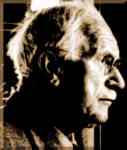 In his book The Gnostic Jung and the Seven Sermons of the Dead, Dr. Hoeller analyzes the sermons that C.G. Jung wrote in 1916 under the guise of Basilides, a second-century AD Gnostic sage. Jung wrote this book after he had received intense psychic experiences, and his sermons criticized prevailing religious orthodoxies and proclaimed a Gnostic alternative. In his book The Gnostic Jung and the Seven Sermons of the Dead, Dr. Hoeller analyzes the sermons that C.G. Jung wrote in 1916 under the guise of Basilides, a second-century AD Gnostic sage. Jung wrote this book after he had received intense psychic experiences, and his sermons criticized prevailing religious orthodoxies and proclaimed a Gnostic alternative.
According to the Gnostic scholar G. Filoramo, Jung considered the ancient Gnostics to be the virtual discoverers of ''depth psychology.'' It is for these reasons that Dr. Hoeller considers Gnosticism both a religion and a psychology. C.G. Jung was also instrumental, in the 1950s, in calling attention to the Nag Hammadi library[3] of Gnostic writings.
Interest in Gnostic teachings has increased
since the discovery of the Nag Hammadi Library
The Nag Hammadi Library, edited by James M. Robinson, is the main collection of Gnostic texts, and was discovered in 1946 and published in English in 1977. The Gospel According to Thomas, The Gospel of Phillip, and The Gospel of Truth are the most widely read.
Dr. Hoeller comments that the experiences of the world wars and the holocaust, and all other events in the twentieth century, have created a level of readiness and sympathy for many Gnostic ideas.
Recognizing elements of Gnostic thinking in popular culture
''We are trying to interpret and understand Gnostic ideas in the light of all the various elements that are present in the culture today,'' said Dr. Hoeller. ''We are looking to materials that are related to our concerns in all sorts of sources.''
Dr. Hoeller's insightful lectures on Harry Potter and Tolkien, which have been recorded on tape and are available to the public, discuss the modern mythos of romance and magic, and the longing of the human mind and soul for the magical and the transcendental.
Tolkien's book have profound relevance to Gnosticism because there is an elaborate mythology about the fight of good and evil, and the return of the spirits to the homeland. Harry Potter is much more popular with children, but these books also concern the magical world of higher forces and alternative reality which are part of the Gnostic view.
The problem with New Age thinking is that
it is based in unverifiable personal revelations
Many ideas of New Age spirituality are unverifiable personal revelations that may or may not have a basis in truth, said Dr. Hoeller. This, he feels, invalidates many ideas in the New Age belief system.
''From a Gnostic point of view, we should utilize available physical and mental resources in order to deal with life and reality as far as they will take you. We should not give up on mental and scientific things too early. No doubt there is eventually a limit to which the physical sciences and statistical methods, and all of these intellectual disciplines, can take you. Then you need intuitive and spiritual resources to deal with those realities. But we should not just abandon the intellectual and scientific right away and say that all of that is not important and all that matters is some sort of intuitive perception, because one is likely to go wrong.''
The importance of finding truth within yourself
In regard to the New Age belief that individuals can channel wisdom from spirits in higher realms, Dr. Hoeller said, ''Our deep conviction is that if we achieve a higher state of consciousness and can know for ourselves, then we don't need channeled entities. Sort of, 'Mother, I'd rather do it myself.' '' He believes that the majority of the channeling phenomena are psychological in nature, since they reflect thoughts from the unconscious mind. Because of this, channeling is not consiered a very reliable source of information in Gnostic tradition.
Since time is an illusion, there is no particular
significance to the turn of the millennium
The idea of a shift in consciousness coinciding with the turn of the millennium is not a perspective shared by Gnostics.
According to Gnosticism, time is illusory and a kind of convention, like fiction. ''People got very excited about the first millennium, and not much happened. It just came and went without much impact. Getting too involved in chronological speculation and expectation that has to do with time is a blind alley. What we are really after is a reality that is timeless.''
The Gnostic position would be: ''We are not about to trust in any collective paradigm shift, but we believe in a shift of consciousness at the individual level that has to occur as the result of personal aspiration. If we are expecting something to happen to large numbers of people sort of automatically, it's not a useful expectation. The expectation of the Second Coming has been with us for 2000 years and hasn't happened yet.''
The so-called ''New Age'' isn't really that new
There is an old saying that there is nothing new under the sun. There is nothing new in the New Age if you know about the history of ideas, said Dr. Hoeller. ''The notion that the mind is so powerful and so creative that it can create reality; that it can undo illness and aging — this is an old idea that comes up, particularly in America, again and again. In the nineteenth century there was Religious Science and similar schools of thought, and the New Age has picked up many of their ideas.''
Although Dr. Hoeller believes that there is some truth to New Age thinking, he points to a kind of excessiveness in this belief system.
Synthesizing different perspectives on ascension
''It would be good if more people took ideas of paradigm shifts and shifts to other dimensions as metaphors for the need for changes in their own consciousness. They would come to realize that the real changes have to come from inside. If we look inside, and if we contemplate the realities that are available to us from within, and practice good meditation, good spiritual rituals, and things of that sort, there will be a paradigm shift, and a dimension shift, but it will be an internal one. In a metaphorical sense, many of these New Age expectations are quite true, but it's primarily metaphorical and shouldn't be taken literally.''
All quotes in this article, (unless otherwise noted), are from an interview conducted with Stephan A. Hoeller, on August 10, 2001.
A brief summary of Gnosticism
Stephan Hoeller's article ''The Gnostic World View: A Brief Summary of Gnosticism'' can be viewed in its entirety at . In this article, he encapsulates in prose ''what the Gnostic myths express in their distinctively poetic and imaginative language.'' The following encompasses some major points in the Gnostic belief system.
Cosmos
- The world is flawed because it was created in a flawed manner
- Earthly life is filled with suffering
- The cause of the world's failings lie with the creator, not with humans
Deity
- God did not ''create'' anything, He (or, It) ''emanated'' brought forth from within Himself the substance of all there is.
- Many portions of the original divine essence have been projected so far from their source that they underwent unwholesome changes in the process. To worship the entire cosmos, or nature, is tantamount to worshipping alienated and corrupt portions of the emanated divine essence.
- Aeons are intermediate deific beings who exist between the ultimate, True God and ourselves. Sophia (Wisdom) is an aeonial being of great importance to the Gnostics. Sophia came to emanate from her own being a flawed consciousness. This was a material and psychic cosmos containing Sophia's own flaw. Sophia, unaware of her origins, imagined herself to be the ultimate and absolute God. She is also called the Demiurgos or ''half-maker.''
The Human Being
- Human nature mirrors the duality found in the world: in part it was made by the false creator God and in part it consists of the light of the True God. The recognition of this dual nature of the world and of the human being has earned the Gnostic tradition the epithet of ''dualist.''
Salvation
- The potential for Gnosis is present in every man. Messengers of Light, including Seth, Jesus, and the Prophet Mani, can assist in salvation.
- Messengers of Light, especially Christ, the Logos of the true God, bring revelations of Gnosis. It is not by his suffering and death but by His life and teaching that Christ has performed His work of salvation.
- The potential for Gnosis and of salvation is not vicarious but individual.
Conduct
- Gnosticism is opposed to a system of rules, (such as a code of ethics, morals, commandments) but embraces an inner integrity arising from the illumination of the indwelling spark
- Gnosticism encourages non-attachment and non-conformity to the world; being in the world, but not of the world; a lack of egotism, and a respect for the freedom and dignity of other beings.
Destiny
Gnosticism does not emphasize the doctrine of reincarnation prominently, but it is implicitly understood in most Gnostic teachings that those who have made effective contact with their transcendental origins while they were in embodiment would not have to return into the sorrowful condition of earthly life.
|
Footnotes:
- ''The Gnostic World View: A Brief Summary of Gnosticism,'' by Stephen Hoeller,
- Ibid.
- Dr. Hoeller summarizes the contents of the Nag Hammadi Library in his article . They are as follows:
- Writings of creative and redemptive mythology, including Gnostic alternative versions of creation and salvation. These are: The Apocryphon of John (two versions); The Hypostasis of the Archons; On the Origin of the World; The Apocalypse of Adam; The Paraphrase of Shem.
- Observations and commentaries on diverse Gnostic themes, such as the nature of reality, the nature of the soul, the relationship of the soul to the world: The Gospel of Truth; The Treatise on the Resurrection; The Tripartite Tractate; The Tractate of Eugnostos the Blessed (two versions); The Second Treatise of the Great Seth; The Teachings of Sylvanus; The Testimony of Truth.
- Liturgical and initiatory texts. (These may be of special interest to persons of sacramental and initiatic interests): The Treatise on the Eighth and Ninth; The Prayer of Thanksgiving; The Valentinian Exposition; The Three Steles of Seth; The Prayer of the Apostle Paul. (The Gospel of Phillip, listed under category 6, does in part have great relevance to this category also, for it is in effect a treatise on Gnostic sacramental theology).
- Writings dealing primarily with the feminine deific and spiritual principle, particularly with the Divine Sophia: The Thunder: Perfect Mind; The Thought of Norea; The Sophia of Jesus Christ; The Exegesis of the Soul.
- Writings pertaining to the lives and experiences of some of the apostles: The Apocalypse of Peter; The Letter of Peter to Phillip; The Acts of Peter and the Twelve Apostles; The First and Second Apocalypses of James; The Apocalypse of Paul.
- Last, but certainly not least, the scriptures which contain sayings of Jesus as well as descriptions of incidents in His life: The Dialogue of the Saviour; The Book of Thomas the Contender; The Apocalypse of James; The Gospel of Phillip; The Gospel According to Thomas.
|
Dr. Stephan Hoeller gives lectures every Friday evening, and conducts a Gnostic Mass on Sundays at 11:00 AM at Sophia Gnostic Center, 4516 Hollywood Blvd., Los Angeles, CA 90027. Cassettes of his lectures are available from BC Recordings,.
The Gnostic Society and Ecclesia Gnostica invite you to join them for the Third International Gnostic Conference — Gnosticon III, October 5–7, 2001, in Long Beach, California, aboard the famous oceanliner the Queen Mary. The Rt. Rev. Stephan A. Hoeller, bishop of the Ecclesia Gnostica, will be presiding and speaking during the conference. Conference programs will include presentations by clergy and members of the Ecclesia Gnostica and invited clergy of allied Gnostic bodies. Activities will begin in the afternoon on Friday, October 5, and conclude on Sunday morning, October 7.
Please visit for further information.
|
 Print Version
|
|
|

