| |
-
John Hagelin, PhD, is a world-renowned quantum physicist and public policy expert. He came to prominence in Washington circles as the Natural Law Party's United States presidential candidate for the year 2000. He offers to our government and people a common sense, systematic, cost-effective, extremely convincing and yet totally revolutionary approach to solving the critical problems facing our world.
Dr. Hagelin's approach, grounded both in modern physics theory and practical research results, is based upon creating large groups of consciously aware individuals whose basic "job" in life would be to meditate and pray collectively for world peace. And lest we think of this as a "soft" solution to the deep problems that beset us, Dr. Hagelin has at hand many hard scientific studies that prove beyond doubt the potential effectiveness of collective meditation to change the Unified Field which is mass consciousness.
As a research physicist, Dr. Hagelin has been able to convince many important individuals in our government that this approach offers the potential to end, once and for all, society's cycles of crime, violence, terrorism and revenge, and bring about true global change (see Spiritual Awakening in the US Government?").
Peterson: What led you to initiate these powerful, world-changing projects? How did it all start?
Dr. Hagelin: It all started by accident. I was a young student of physics, and at seventeen I was in a motorcycle accident and sustained serious injuries. A medical doctor suggested that I learn transcendental meditation as a way to reduce pain, gain deeper rest than ordinary sleep could provide, and mobilize the body's healing mechanism more effectively.
I took his advice, and actually did get better quickly. But aside from the physical benefits, I was immediately charmed by the mental benefits.
For me, as a physics student, transcendental meditation was particularly beneficial, because physics can be a forbidding discipline — abstract, dry, and especially difficult when one is fatigued. After meditation, I found that the same textbooks were essentially experienced as though in Technicolor — such was the lucidity — and the whole of physics became enjoyable. So I stuck with meditation throughout all my years of study.
After I received my PhD from Harvard, I went to Geneva, Switzerland, to the big "particle physics think-tank" and studied the recent progress in physics theory, including the beginnings of the so-called "superstring" revolution and the fulfillment of Einstein's dream: the discovery of a Unified Field. It was only now that physics had matured to the point where the connection between my scientific study of the essential unity of life and my subjective development through the meditative experience really clicked.
Since then, after further exploration, I realized that they clicked in a way that was not merely qualitative but profoundly precise and quantitative. In today's physics, we really do have the union of modern science and ancient wisdom, particularly the ancient Vedic science from the Himalayas from which most of our world's spiritual traditions spring.
Working out the details of that union has been a wonderful experience for me.
Peterson: A lot of people became excited and inspired when you ran for the United States presidency in 2000. What motivated you to become involved in politics and to be a candidate for the presidency?
Dr. Hagelin: In May of 1992, I was very discouraged, I would say even disillusioned, with the presidential choices.
Bush senior was very tired, and in my opinion he had sold out to the military, the oil industry, and the other special interest groups that were bankrolling his campaign.
Clinton was the main democratic contender at that time, and in some respects he was, perhaps, a fresher voice. But he did not have any sustainable or forward-looking solutions. So I felt that we had to inject some fresh and profound ideas — real prevention-oriented and long-lasting solutions — to the political world.
Subsequently, I looked at my calendar, and for those several months remaining in that campaign, I could think of nothing else I could do as a citizen that had such a great potential to profoundly influence public policy.
So I jumped into the political arena, and entered the dialogue by bringing all sorts of new solutions. These were solutions that Americans could immediately comprehend as a better approach once they were exposed to them — so much so that even Republicans and Democrats could both embrace them.
So that's what I did.
There were many very enthusiastic people, enough to create a whole new political party — the Natural Law Party — and get it on the ballot in several states in addition to qualifying for matching federal funds. It was a huge project. I must say that even if the average American voter didn't hear that much about us, members of Congress certainly did. Consequently, the impact in Washington was far greater than the impact on the general public.
One of the joys of being a presidential candidate of the Natural Law Party — a party founded on the scientifically verifiable truth of the unity of existence — is that it has been a delightful exercise in reformulating social policy, education, criminal justice, and defense, as well as economics and health care, on the basis of this newer paradigm.
Peterson: And yet, as you say, the public did not hear much about this. Yet you still feel hopeful about this new paradigm?
Dr. Hagelin: Once "out of the bag," certain kinds of powerful solutions and ideas are so powerful that they can never be recalled. Even if their impact takes some time to unfold, those solutions and ideas will ultimately have an irreversible effect on the direction of policy.
An example is the right of women to vote. It took time. But it was such an irrefutable, undeniable right that its success was inevitable. It just took time.
That's why one of the most powerful things that a citizen can do is take part in the political process. Every four years we are provided with an opportunity to collectively think deeply about the future of our country.
Peterson: You recently returned from a world peace tour. How did that go?
Dr. Hagelin: I was very pleased with the quality of the audiences. But wherever I've gone, I've had the sense that people were very frustrated.
In the last election, the kinds of ideas that were debated by Gore and Bush junior did not embody profound solutions. Profound solutions were systematically excluded from the debate, and from ballots, wherever possible. And now, even though the polls seem to indicate that President Bush has overwhelming support for his unilateral military action, that's not what I see.
Nevertheless, it looks as though politics are functioning the way they tend to do, so he may get his way. I'm not sure at this point if we're capable of derailing his vote in the Senate. If he gets the license he is seeking, the question then becomes, What will he do with that license?
So we need to work extremely diligently right now to rally more collective consciousness to prevent what could be a very serious disaster for the whole of humankind.
Peterson: Overall, you've found that people want a peaceful resolution rather than what President Bush is trying to promote?
Dr. Hagelin: I would like to think that most people want peace. Very few people who have thought through the consequences of war would be for it. Unfortunately, I think that there are many who don't bother to stop and think about the consequences of their own actions, let alone the actions of the country.
What actually happens is really about the degree to which national consciousness is awake and aware. So it is that wakefulness and awareness we need to increase right now. The main focus of my effort since the year 2000 has been to see what we can do to elevate the collective consciousness.
Peterson: What is your plan for bringing this about?
Dr. Hagelin: I think the quickest thing we can do at this point is to create a powerful meditative influence for peace and global unity by assembling groups, all across the country and throughout the world, to meditate collectively. Research shows that group meditation has a powerful societal impact in increasing unity and harmony and in reducing social stress.
I'm focusing right now on building a group of eight thousand full-time peace creators in the United States, and as many as forty thousand in India.
The logistics of supporting, housing, and feeding such groups are fairly intensive, so ultimately it's going to be a costly project. Over the past five or six months I've raised about eighty-eight million dollars toward this goal, and we need a lot more.
Peterson: That sounds wonderful! Please tell us more about the research that proves meditation can make significant change in the world condition.
Dr. Hagelin: There are fifty-two extensive research studies that I am intimately aware of. In addition, I was lead author in one of the most rigorous studies on the effects of collective meditation, particularly in reducing collective stress.
For more than forty years, the medical community has admitted that individual stress is the cause of most illness and ill behavior. Now there is mounting evidence that in society as a whole, stress is responsible for many of our social diseases, domestic violence, crime, and war.
Regional war in the Middle East, for example, erupts when you have mounting tension among rival factions — religious, ethnic, and political. If these tensions rise unchecked for generations, inevitably you reach a boiling point and societal stress will erupt into violence and war.
If you can effectively defuse the societal stress and tension that are the underlying cause of war, you can stop the violence before it starts. And collective meditation can defuse societal stress and tension. That commonsense hypothesis has been explored now, as I said, in fifty-two studies of urban, metropolitan, state, country, and global populations when meditating groups have been large enough to have a global effect.
Many of these studies have been published in the leading and most skeptical scientific journals, simply because the strength and statistical rigor of the research made it impossible for them to reject it. These studies have been held to an extremely high standard by anonymous, skeptical peer reviewers, and their conclusions have ultimately been accepted for publication based on the accuracy and soundness of their conclusions.
This is fact. This fact has been as rigorously established and extensively confirmed as any phenomenon in the history of the social sciences.
Peterson: Can you give us examples of these kinds of studies?
Dr. Hagelin: Seven different international collaborations took place under the recommendations of the editors of Yale University's Journal of Conflict Resolution. In order to assess the effects of group meditation, they created different-sized groups of meditators located at different distances from the Lebanon war. They proved that the ensuing stress reduction impacted the outbreak of hostilities.
A very recent study using Rand statistics has shown global reductions in terrorism during periods of global meditation.
Peterson: I once read a report showing evidence that the end of the Cold War was initiated through global peace meditations and prayers.
Hagelin: Yes, there is evidence that the end of the Cold War was impacted by a variety of global meditations.
Peterson: So you are saying that most of the toughest problems facing humanity today could be solved through group meditation?
Dr. Hagelin: Yes. I think that's true.
Peterson: What about the political solutions?
Dr. Hagelin: As you know, peace treaties among elected representatives of nations aren't worth the paper they're written on when enmity and vengeance still seethe in the hearts of the rival factions involved in the conflict.
At the very least, you've got to create a fertile field of harmony in the underlying field of collective consciousness before you can expect a negotiated settlement to take root.
Generation after generation of peace treaties in the Middle East bear this out. You would think by now that nations and their elected representatives would see the futility of military or diplomatic settlements that fail to address the root causes of regional and global violence.
Peterson: Can prayer be as effective as meditation?
Dr. Hagelin: That depends. But the reliability and magnitude of the effect will depend upon who is doing the praying and, even more importantly, "how" they are praying.
The problem with prayer is that there is no systematic school of prayer. Most churches don't systematically teach methods of prayer, and the methods that do exist differ from religion to religion.
To elucidate my point: The universe is structured in layers of creation — from superficial to profound, macroscopic to microscopic, classical to quantum mechanical. And the deeper you go into this layered structure of existence — from the molecular to the atomic, to the nuclear, to the subnuclear, to the grand unified, and finally to the super-unified scale — the more powerful nature becomes. That's why the atomic nucleus, which is a million times smaller and a million times more fundamental than the molecule, is also a million times more powerful.
The human mind is similarly structured, in layers of thought and mental activity from the surface to the profound, from concrete classical speech to the abstract. And there are powerful impulses of thought that can transcend to the level of Being — to the level of Atman, self, pure spirit, and life itself.
So the power of the mind — for anyone — simply depends on the level at which the mind is being used. That means that effectiveness of prayer depends — I would say by a factor of a million or more — on how you pray.
If you cry out the name of God using the mind in a very concrete and relatively coarse level, you may gain some emotional upliftment.
If you quietly feel God's presence and feel that presence pervade mind and physiology, that is a much more powerful level of communion.
Deeper still, if you commune with God on the level of Being, you become One with God's essence at the source of thought and pure consciousness — Atman, the Self. When that union is complete at the foundational level of the thinking process, prayer and thought become extremely powerful.
Peterson: With all the different belief systems throughout the world and people being at various levels of awareness and enlightenment, is meditation a solution that can be successfully implemented throughout all cultures?
Dr. Hagelin: That's a very good question. The answer, certainly in the longer term, is yes. When properly understood as the means to take the mind beyond thought in order to experience the source of pure Being, meditation is not specific to any one culture. It is, perhaps, the core experience of every religion, language or tradition, where the devotee unites and communes with the Creator.
That's why Christian monks, Jewish rabbis, and people of Islamic, Hindu, and Buddhists faiths can learn, practice, and enjoy a technique like transcendental meditation, because it's not taught with cultural baggage — it doesn't come with the philosophy. Culturally, it is appropriate.
Peterson: More specifically, how can the teaching of meditation be most effective?
Dr. Hagelin: One can and should introduce the meditative experience into education.
Peterson: Then you see this as a way of looking at spiritual experience that might be accepted in our educational system?
Dr. Hagelin: We don't have to call it "spiritual experience." Using modern scientific terms, we can call it the experience of the Unified Field, the universal field of intelligence in nature that underlies and pervades all of us.
Any education dealing with less than that really deprives our young people of enjoying their birthright: the full breadth of comprehension, fully integrated brain functioning, and the potential of the human brain to be cosmic and to experience this fact globally.
On scientific ground, meditation is a documented holistic experience, and it's the only experience that's like that. It is the only experience that utilizes and thereby enlivens the total brain. In meditation, the entire brain — left and right hemispheres, frontal and occipital lobes — functions in concert.
Education should be for enlightenment. Higher education should be for higher consciousness. Fact-based education is obsolete within months of graduation. Consciousness-based education, on the other hand, develops the full potential of human consciousness — mind, body, and behavior. That is true education.
Interestingly, many of today's graduates have dysfunctional holes in their brains — especially those who have abused drugs and alcohol. In practicing meditation, those misused or unused regions become enlivened and active in an integrative and holistic style of brain functioning.
The experience of orderly brain functioning correlates scientifically with intelligence — IQ, creativity, learning ability, academic performance, psychological stability, emotional maturity, and moral reasoning. Everything good about the brain depends on its orderly functioning and holistic development, which are the spontaneous by-products of spiritual experience.
Peterson: Do you think that the teaching of meditation in the schools can impact our current world situation?
Dr. Hagelin: Ultimately, we must have the experience of universal intelligence in every classroom. That would make our founding fathers very happy, because they believed in this type of education.
But as an educator, I know that empowering this point of view will take time, and I don't think we have that much time.
That's why group meditation is so powerful. It's something we can do now, today. If even eight thousand people were dedicating much of their days to the collective experience of the Unified Field of intelligence, that could have a demonstrable effect in bringing about an upsurge in unity and a reduction in the social stress and tension that drive terrorism and war.
Believe it or not, even the military could have a meditation group. These people are paid to keep the peace and protect the country, and they can't do that by marching back and forth with a rifle. That only increases fear and tension. A military group that was actually paid by the taxpayers to prevent war and violence through meditation could succeed in preventing the upsurge of conflict while protecting the country and the world against terrorism. It's that easy!
As I said, this thesis has been exhaustively tested. Now it's just a question of acting on it.
But governments are traditionally very slow to act, particularly in democracies where people are afraid of their own shadows. So we're going ahead on our own, raising the resources we need. So far, we've made a very good start in building such groups.
Peterson: Now that you've had the experience of running for the presidency, do you think that's the most effective use of your time? Or is it more effective to be doing what you're doing right now, speaking to groups and individuals.
Dr. Hagelin: Working with the individual is ultimately more powerful. I will continue to work at raising the consciousness of the country.
I've learned enough about how government works and the perquisites of being president of the United States to say that if there were a grassroots uprising and I were asked to run, I would do it. But I don't think that campaigning will be my focus at this point.
Peterson: What would you like to say in closing?
Dr. Hagelin: It's most important that people understand the enormous power that they wield, just by utilizing their own God-given potential, to achieve what they want for themselves and for the global community. This is the world's best kept secret: the actual power that each individual holds. What we achieve is only a question of the extent that we are motivated to exercise that power.
So I urge people to get involved with a developmental procedure and a meditative process that takes them quickly to that place where they're exercising their mind on a cosmic level. That is the level where a small handful of people can change events in the world.
All we need are just a few such enlightened people everywhere, and we'll see a different world.
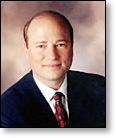 Dr. John Hagelin Dr. John Hagelin received his BA summa cum laude from Dartmouth College in 1975, and his PhD from Harvard University in 1981. He is currently director of the Institute of Science, Technology and Public Policy and professor of physics at Maharishi University of Management.
Dr. Hagelin has conducted pioneering research at CERN (the European Center for Particle Physics) and SLAC (the Stanford Linear Accelerator Center) and is responsible for the development of a highly successful Grand Unified Field theory based on the Superstring. His scientific contributions have been featured in a cover story of Discovery magazine.
He has successfully headed a nationwide effort to identify, scientifically verify and promote cost-effective solutions to critical social problems in the fields of crime, health care, education, economy, biotechnology, energy, and the environment.
To find out more about Dr. Hagelin and world peace projects and how you can participate, please visit Dr. Hagelin's website at . More information can also be read at and
.
|
Share your .
Top of Page
 Print Version
|
|
|